

rayr.over-blog.com/
18 Janvier 2021

As reported by 9to5Mac, ' Apple is testing some major changes to iCloud Keychain on iOS 14. Users will be warned about reused passwords, so they can avoid using the same password on. There is no default password. Either you are in the Setup Assistant in which case it wants you to provide a new password; or, you exited from the Setup Assistant and never assigned a password in which case press RETURN. It's hard to advise you if you weren't paying attention to the setup and don't know what you did or where you are now.
Creating new admin account is available in Users & Groups when you have admin privileges to access Mac. However, if you cannot sign in Mac, is it still allowed to create new admin account? Surely it is even though that is not so easy to do like in Users & Groups.
Single user mode is a special startup environment, which boots Mac to a terminal-like interface where users can run commands to do what they want on Mac, such as repairing startup drive or creating new admin account etc.
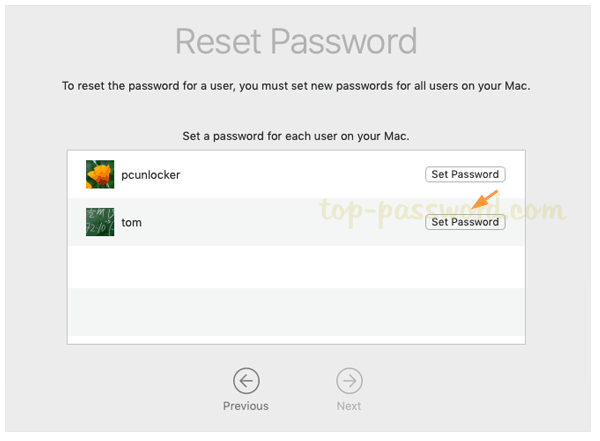
Step 1: Start Mac in single user mode.
To boot Mac in single user mode, just need to power on Mac and hold on Command + S. If you fail, try another time.
Step 2: Mount the startup drive.
While you see a command prompt in the form of a ':/ root#', type the command below to make files accessible in the startup drive. Press Enter to continue.
/sbin/mount –uw /
Step 3: Remove the file to force OS X to boot like the first time.
Now you have the privileges to remove the files from drive. Run the command below, and it will remove the necessary file that can recognize your Mac are not booted at the first time when Mac restarts.
rm /var/db/.applesetupdone Mac studio fix powder c30.
But once it is done, you can enter 'reboot' to restart Mac, and OS X would think that it is the first time you boot the currently installed OS X. So you can create new admin account during the setup process.
Note: Don't worry about your data on Mac would be lost or damaged. It would just go through the system setup process again. Nothing would be changed on Mac besides the new settings you make in the process.
Step 4: Create new admin account in setup process.
Mac restarts and displays the Welcome to Mac screen. Follow the wizard to choose your location, set your keyboard, choose the way to transfer data, set your Apple ID and agree the terms and conditions. At last, you will be asked to create an account for mac.
1. Default name for this account has been shown there. Surely you can change it but do not use the same name as the old administrator on Mac. Otherwise, data about this account will be deleted from Mac.
2. Enter password and confirm it. Click Next and Mac will save these changes.
Few minutes later, Mac will reboot and sign in automatically with the account you just created. You have new admin account and could use it to reset forgotten admin password for Mac or do whatever troubleshooting steps.
Related Articles:
Due to the robust security within Apple's new macOS operating system, there is a high emphasis on data protection. Whether you're simply logging in, downloading new software, or trying to delete files or apps from the hard drive, you will always need to input your Mac password. Here are a few ways you can remember or reset it and get back to using your Mac.
Often when Mac users forget their passwords, it's the consequence of having a cluttered Mac. With an overload of information to sieve through every day, people have a tendency to forget information. So, first and foremost, you should clean up your Mac to make sure your new password is the one entering you into a tidy and organised computer.
With CleanMyMac X, you can remove large and unwanted files, organising your digital folders and clearing your physical headspace. With its smart, one-click cleaning approach and powerful scanning, you can swiftly dispose of useless documents and apps which may even be slowing your Mac down. With CleanMyMac, you can launch a Smart Scan, removing systems junk, photo and file duplicates, and everything else that will clog up your Mac.
In addition, this amazing tool is free to download, so what are you waiting for?
Before resetting your password, you should always check to see if the password hint jogs your memory. The ‘hint' is a phrase you entered relating to the password when you first set it up, and is triggered once you make 3 incorrect password attempts:
The screen will shake each time you press Return, with the third shake generating the password hint which will appear below the Password field. Hopefully this initiates a Eureka Moment making you remember the Login and brings an end to the password perils.
Sometimes though, the hint doesn't show up. That's because the Mac wasn't set up to show password hints in the Login Options – only modified by logging into your Mac. Fortunately, there are an array of other solutions to finding your password.
In the event that you happen to share your Mac with another person, and they have their own account, you can use their Login to reset your password. Or, if you have a different account on the Mac that you know the password to, you can recover your Mac admin password by following these steps:
Now, the password for that account has been changed, allowing you to log in using the new password. However, this doesn't change the password for the Keychain (macOS's password management system), and you'll be asked when you log into the account to update the keychain password. This requires you to enter the old forgotten password, so you'll have to click ‘Create New Keychain'.
This introduces a further problem, because if the other user isn't the registered Admin, they won't be able to change the password for you. Luckily, there is an alternative solution to recovering your password.
Apple provides a tool to replace a Mac's password through bypassing all of the previous steps. This is the best option if you don't have a password hint, can't log in via another account and have completely forgotten your password.
Due to the fact Recovery Mode provides a nifty means to resetting the Mac password, you may be wary that anyone can hack your Mac – and once someone accesses your Mac, you've usually lost control over it. So, it's a good job there's some interventions you can make to prevent this happening.
The best way to protect your data is to active FileVault encryption. This means that the Password Reset option won't become available unless you unlock it with Disk Utility. To turn it on and set it up:
Once done, you will receive a Recovery Key and a password, which you should take note of. If you lose these, your data won't be able to be recovered and will be lost forever.
Another effective way to protect the data on your Mac is to download tried and tested app CleanMyMac X. With automatic clean-ups and regular system monitors, your data is continuously observed and safeguarded from any piracy or hacking.
If all else fails, Target Disk Mode can help you recover whatever you can from the lost Mac. Using another Mac, you can access the hard drive on the lost Mac and save any wanted data.
The hard drive from the lost Mac should now appear, allowing you to recover and save wanted data onto the new Mac.
Thanks for reading and stay tuned!


/image%2F6206736%2F20210221%2Fob_41ac0b_mac-training-book.jpeg)
/image%2F6206736%2F20210221%2Fob_de6068_mac-velvet-teddy-37.jpeg)
/image%2F6206736%2F20210221%2Fob_e9b93c_play-minecraft-free-mac-online.png)
/image%2F6206736%2F20210221%2Fob_26732f_screen-cut-tool-mac.jpeg)